The VPN Market in 2026
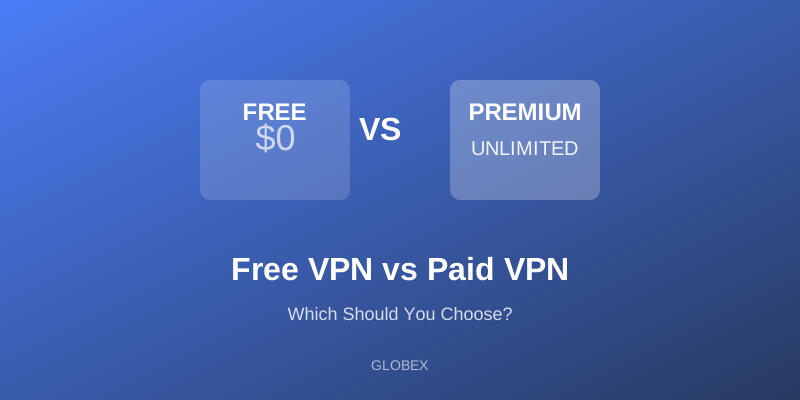
In short: Free VPNs are fine for trying the technology, but many fund themselves by limiting your data, slowing your speeds, or — in the worst cases — logging and selling the very activity you're trying to protect. Paid VPNs remove those limits and fund the service directly. The single most important rule is to choose a provider whose business model and privacy policy you trust, because with a VPN you are handing all your traffic to one company. Here's how to weigh the options.
With hundreds of VPNs available, choosing the right one can feel overwhelming, and the first fork in the road is almost always the same: should you use a free VPN, or pay for one? The honest answer is "it depends" — but understanding *how* each kind makes money tells you most of what you need to know.
Free VPNs: The Honest Truth
Running a VPN costs real money — servers, bandwidth, and engineering all have to be paid for somehow. With a free VPN, the key question is always: *who is paying for this, and how?* A reputable free tier is funded by a paid tier (you're a future customer). A disreputable one is funded by you, just not in the way you'd choose.
The Upsides
- No financial commitment — useful for trying VPN technology before you spend anything.
- Real privacy protection from the better free services — encryption and IP masking still work.
- A genuine option for light use if the provider is trustworthy.
The Risks
- Data monetization. Some free VPNs log your activity and sell anonymized (or not-so-anonymized) browsing data to advertisers — the opposite of what a VPN is for.
- Data caps. Many limit how much you can transfer per day or month, which is impractical for streaming or heavy use.
- Slower speeds. Free users often share crowded servers, so throughput suffers at busy times.
- Fewer locations. A short server list means fewer options and more congestion.
- Weaker feature sets. Older protocols, missing kill switches, or no split tunneling.
Red Flags to Watch For
Before trusting any free VPN, check for these warning signs:
- No clear, readable privacy policy — if you can't tell what they log, assume the worst.
- Excessive app permissions that have nothing to do with networking (access to contacts, SMS, etc.).
- "Too good to be true" claims like unlimited everything at zero cost with no paid tier in sight.
- No identifiable company or contact information behind the app.
- Poor reputation — search for independent reviews and reported incidents before installing.
Paid VPNs: What You're Buying
A paid subscription means the provider's incentive is to keep *you* happy rather than to monetize your data. That alignment is the real product. In practice, paying typically gets you:
Benefits
- No data caps — use the VPN as much as you like.
- Faster, less crowded servers for smoother streaming and downloads.
- More server locations to choose from.
- Stronger feature sets — kill switches, modern protocols, split tunneling.
- Customer support when something goes wrong.
- Clearer no-logs commitments, sometimes backed by independent audits, which give you a reason beyond marketing to trust the privacy claims.
Drawbacks
- A recurring cost, monthly or annual.
- Long commitments for the best price — the cheapest rates are usually multi-year plans.
How to Choose: The Questions That Actually Matter
Price is only one factor. Whichever route you take, judge a VPN by:
1. The logging policy. What does the provider record, and for how long? "No logs" should be specific, not a slogan.
2. The business model. If it's free, how is it funded? A free tier supported by paid subscriptions is far safer than one with no obvious revenue.
3. Transparency. Is there a real company behind it, with clear policies and ideally independent audits?
4. The basics done well. Strong encryption, a kill switch, and modern protocols matter more than a huge server count.
5. Jurisdiction and reputation. Where the provider is based and how it has handled past incidents both tell you something.
The GLOBEX Approach: A Trustworthy Free Tier
At GLOBEX, we believe everyone deserves online privacy, which is why the free tier is built to be genuinely usable rather than a trap:
Free Plan:
- Unlimited bandwidth — no daily data cap.
- Access to our server locations.
- Strong encryption on every connection.
- No selling your data — ever. The free tier is supported by optional ads and the premium upgrade, not by monetizing your activity.
Premium Plan:
- An ad-free experience.
- Priority access to servers.
- Priority customer support.
- The same unlimited bandwidth as the free tier.
The important point is that you are never the product. The free plan is funded honestly, so choosing it doesn't mean trading away the privacy you came for.
Common Questions About Free vs Paid VPNs
Is a free VPN safe to use?
A free VPN from a reputable provider with a clear privacy policy and a paid tier behind it can be perfectly safe. The danger is free VPNs with no obvious funding model, vague logging policies, or excessive permissions — those may monetize your data instead of protecting it.
Are free VPNs slower than paid ones?
Often, yes. Free users frequently share more crowded servers, which can reduce speeds at busy times. A well-run free tier with unlimited bandwidth still performs well for everyday browsing, but heavy streaming or downloading is where paid plans tend to pull ahead.
Do paid VPNs guarantee privacy?
No VPN can "guarantee" privacy, but a paid VPN's incentives are aligned with protecting you rather than monetizing you. The strongest signal is an independently audited no-logs policy combined with a transparent company behind it.
Should I pay for a multi-year plan?
Long-term plans usually offer the lowest monthly price, but only commit once you've confirmed the service fits your needs. Try a trustworthy free tier or a short plan first, then lock in a longer term if you're satisfied.
Our Recommendation
Start with a trustworthy free VPN to test the waters and confirm it fits your routine. If you want an ad-free experience, priority speed, or extra support, upgrading to premium is the natural next step.
Above all, choose a VPN with transparent privacy practices and a funding model you understand — regardless of price. A free VPN you can trust beats an expensive one you can't.